Buying Waterproof Folding Tents: What to Keep in Mind
Summary: A high-quality folding tent reliably protects you from unexpected downpours at events, trade shows, and markets. Since fabrics that are merely “water-repellent” aren’t sufficient in heavy, sustained rain, you should look for a high water column rating and professionally sealed seams when making a purchase. In this article, you’ll learn which standards are crucial and what matters most when making your selection.
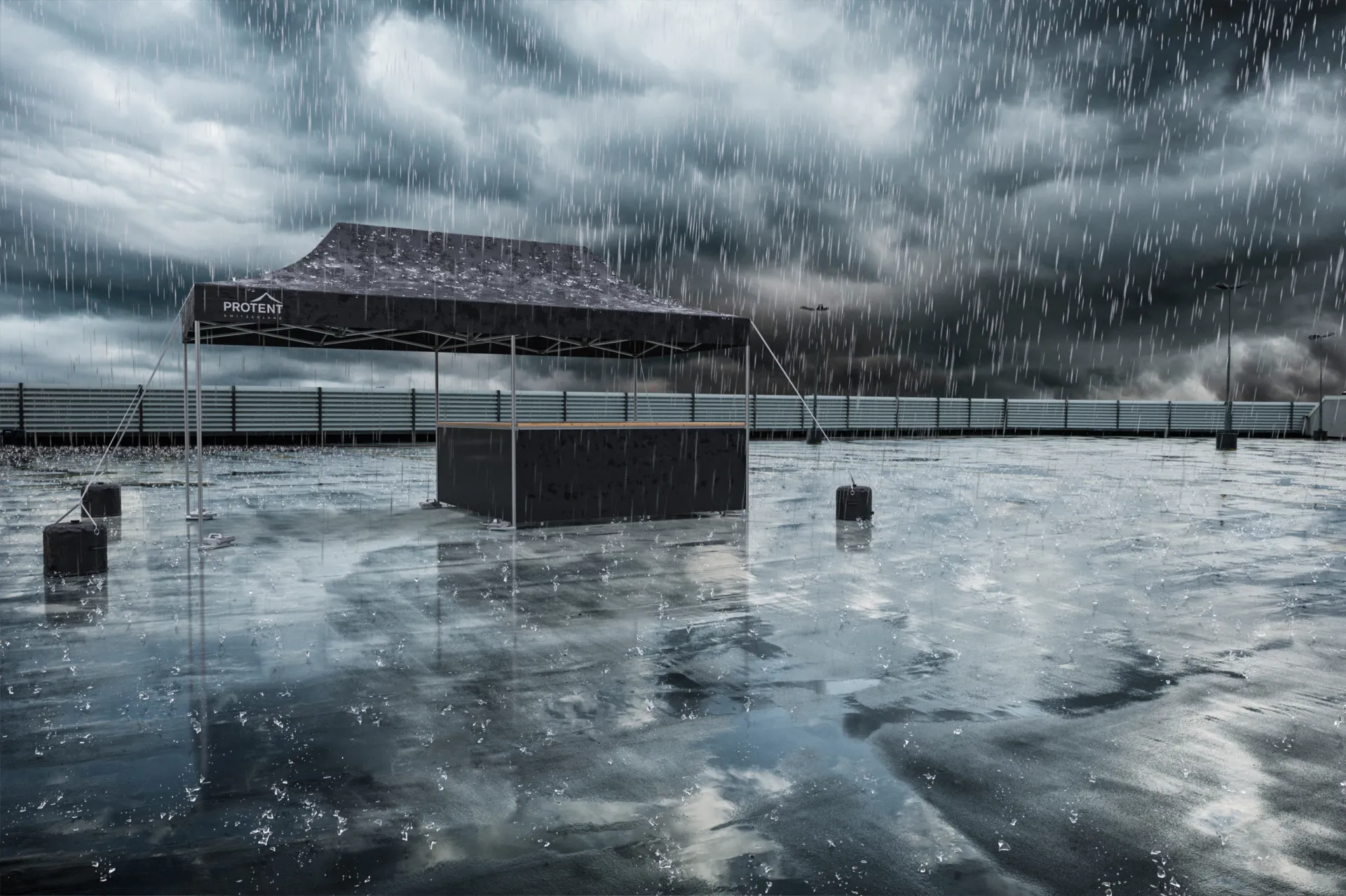
The Right Folding Tent for Rainy Days
A folding tent is more than just an aesthetic choice. It’s designed to offer you protection from the sun, wind, and—ideally—heavy rain as well. That’s why users, especially in professional settings, prefer a waterproof folding tent.
But what criteria actually apply here, and under what conditions can a folding tent rightly be called “waterproof”? We’ll tell you what you absolutely must look for when making a purchase!
Applications: Where are waterproof folding tents used?
In general, every folding tent—even when used in a private garden—should be able to withstand a minimum amount of rain. After all, you don’t want to have to fold up the tent and go inside as soon as a little rain starts to fall.
When it comes to professional and commercial use, a fully waterproof folding pavilion is essential. That’s why you’ll find them used in the following areas, among others:
- Markets & Promotions: As a market tent or eye-catching promotional tent
- Emergency Services & Shelter: As a rapid-deployment tent or a covered work tent
- Events & Food Service: As a party, event, garden, or food service tent
- Outdoor: As versatile shelter for any outdoor activities
Waterproof Folding Tents: Use these standards as a guide
When purchasing a folding pavilion for outdoor use, you should definitely ensure that the model is truly waterproof. The ISO 811 standard (DIN EN 20811:1992) specifies the resistance of textiles to water penetration. The test measures the water pressure a surface can withstand until the third drop penetrates the fabric.
The European standard EN 343:2003 applies to rainwear and is based on water pressure.
The EMPA (Swiss Federal Laboratories for Materials Testing in St. Gallen, Switzerland) applies even stricter standards: it classifies functional materials as waterproof only when they have a water column of 4,000 mm or higher. Incidentally, Pro-Tent fabrics have a water column of 10,000 mm.
Standards & Water Columns at a Glance
| Standard / Testing Agency | Water Column | Classification |
| EN 343:2003 (Class 2) | 800 mm and above | Waterproof (basic standard) |
| EN 343:2003 (Class 3) | 1,300 mm and up | Waterproof (Higher Class) |
| EMPA (Switzerland) | 4,000 mm and up | Waterproof for functional fabric |
| Pro-Tent Quality Standard | 10,000 mm | Maximum waterproofing & professional protection |
Water-repellent isn’t enough for folding tents
You’re probably familiar with this from shoes: a simple waterproofing treatment makes textiles or other materials water-repellent. However, if a folding tent is labeled only as water-repellent—not waterproof —you should steer clear of it.
That’s because water-repellent stops where waterproof begins —namely, at a water column of about 800 mm. So under a tent that’s merely water-repellent, you’ll still get wet in heavy, sustained rain.
Additional Tips to Help You Make Your Purchase
To find out whether a folding tent can withstand prolonged rain, you should take a close look at the overall construction:
- Seam sealing: In addition to the fabric’s waterproofness, it’s especially important to check the seams. These must be sealed with at least a seam-sealing tape. It’s even better if the thread used is also water-repellent.
- Roof design & slope: Last but not least, a perfect roof design with an even slope is essential. This not only looks great but also prevents dangerous pockets of water from forming. Awning tensioners further help prevent this risk.
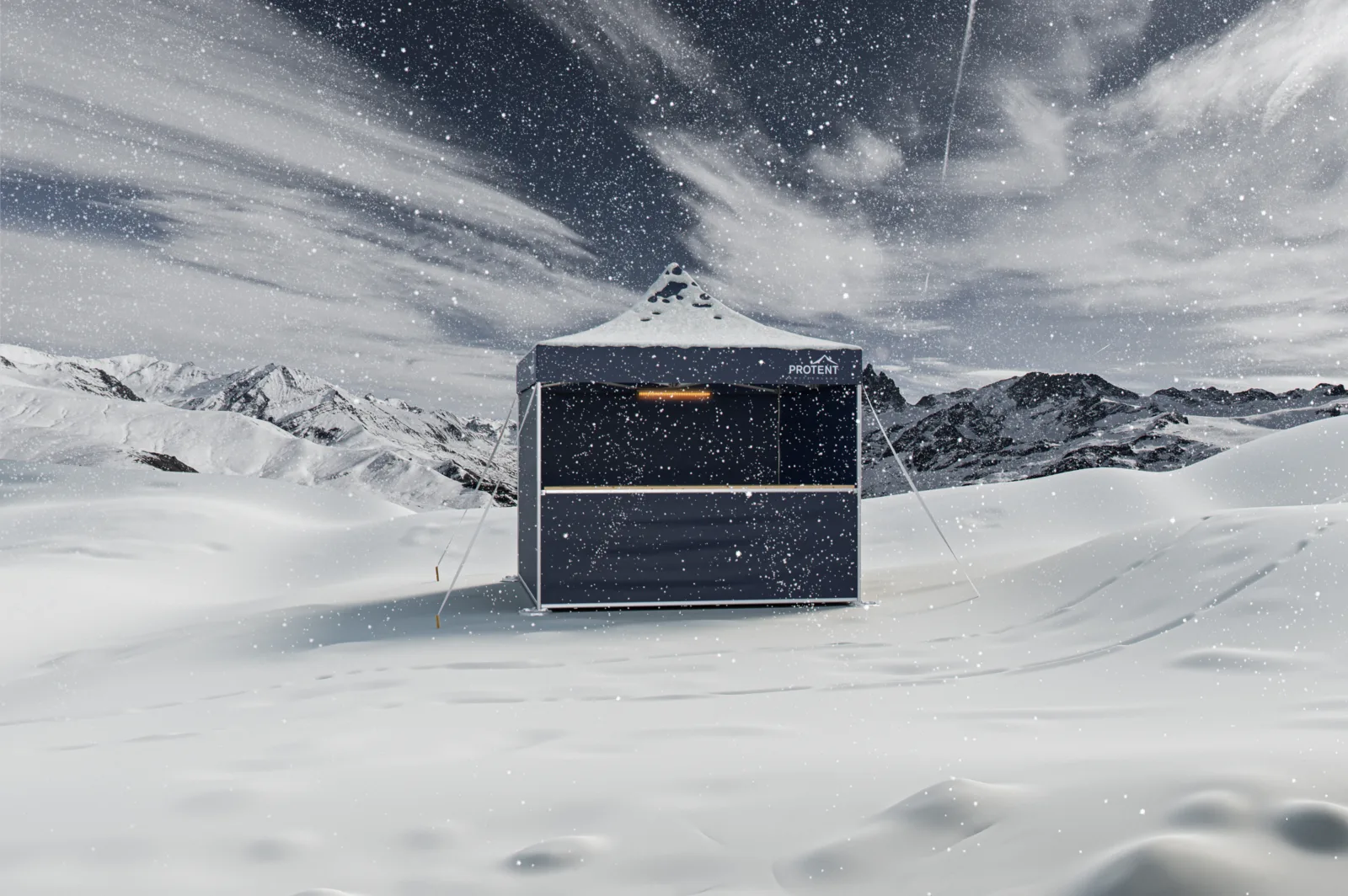
- Wind and Weather Resistance: If you want a tent that’s not only waterproof but also windproof, our premium Pro-Tent 4000 and Pro-Tent 5000 folding tents with omega profiles are the perfect choice. Since the side walls are inserted directly into the system groove, the pavilions are completely waterproof and windproof.
Additional Guidance for Your Purchase
To determine whether a folding pavilion can withstand prolonged rain, you should take a close look at the overall construction:
- Seam Sealing: In addition to the fabric’s waterproofness, it’s especially important to check the seams. These must be sealed with at least a seam-sealing tape. It’s even better if the thread used is also water-repellent.
- Roof design & slope: Last but not least, a perfect roof design with an even slope is crucial. Not only does this look great, but it also prevents dangerous water pockets from forming. Awning tensioners further eliminate this risk.
- Wind and Weather Resistance: If you want your tent to be not only waterproof but also windproof, our premium Pro-Tent 4000 and Pro-Tent 5000 folding tents with omega profiles are the perfect choice. Since the side walls are pulled directly into the system groove, the pavilions are completely waterproof and windproof.
FAQ: Frequently Asked Questions
A high water column ensures that the material remains completely waterproof even during prolonged heavy rain or when subjected to pressure from accumulated water.
Make sure the roof has a precise cut with a good slope, as well as integrated tensioners that keep the roof tarp taut at all times.
Conclusion: Your Waterproof Folding Pavilion from Pro-Tent
Don’t compromise when it comes to outdoor use: Rely on tested waterproofing, high-quality seam sealing, and a well-thought-out design to ensure your events are a complete success in any weather.