Securing a Folding Pavilion: How to Anchor Your Folding Tent in Windy Conditions
You’ll only benefit from the exceptional sturdiness of Pro-Tent folding tents if you secure them properly. In addition to properly tensioning the tent at a 45-degree angle, specialized guying kits, weight plates, and water and sand weights ensure maximum stability in windy conditions. In this guide, learn step-by-step how to secure your folding tent against wind, what wind speeds it can withstand, and which accessories work best.
Only by securing your folding pavilion properly can you fully benefit from the exceptional sturdiness of Pro-Tent folding tents. Proper tensioning is just as important as additional safety measures, which ensure the necessary stability in windy conditions. We’ll explain what really matters when securing your tent and how to protect your folding pavilion against wind.
How to Secure Your Folding Tent with Proper Tensioning
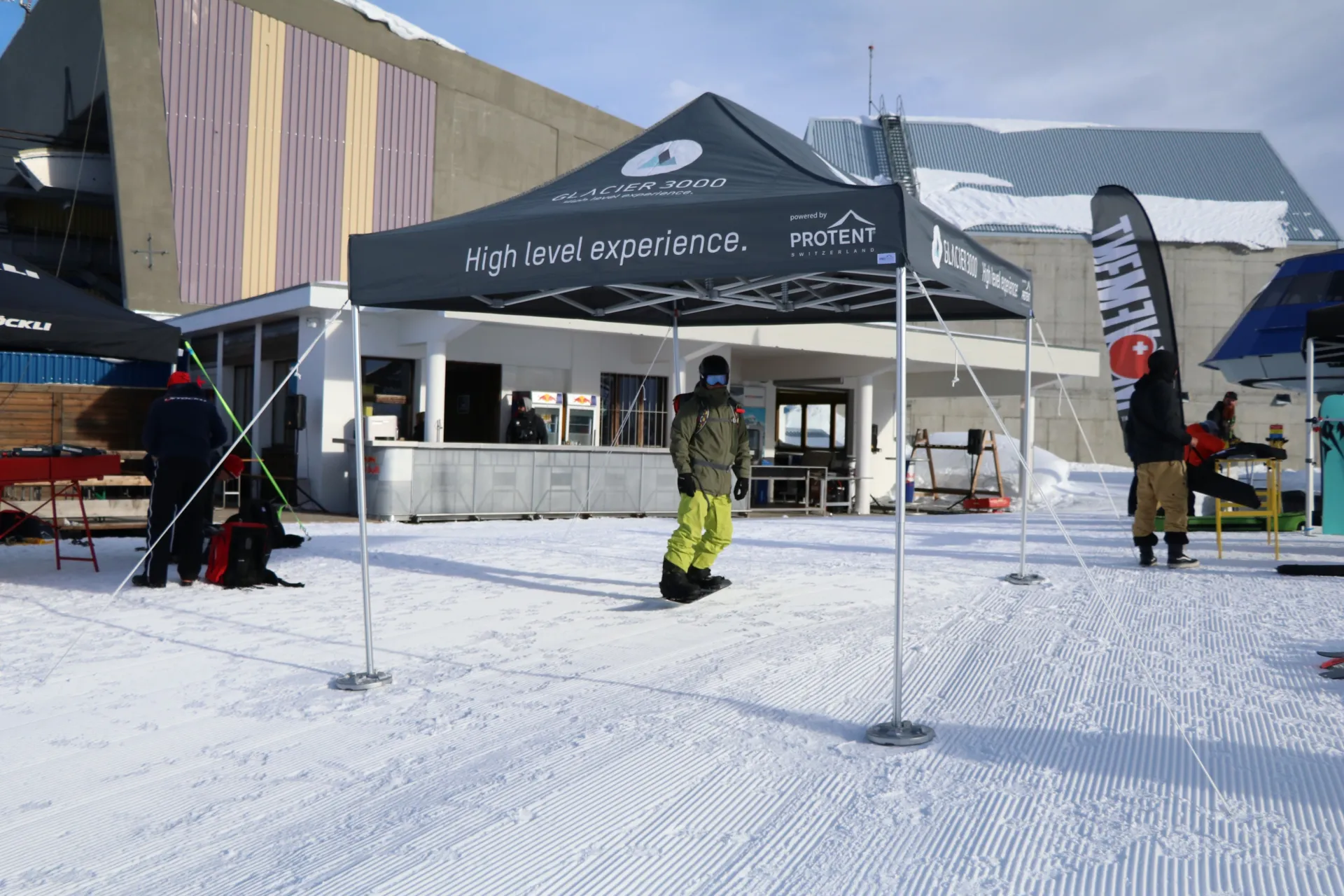
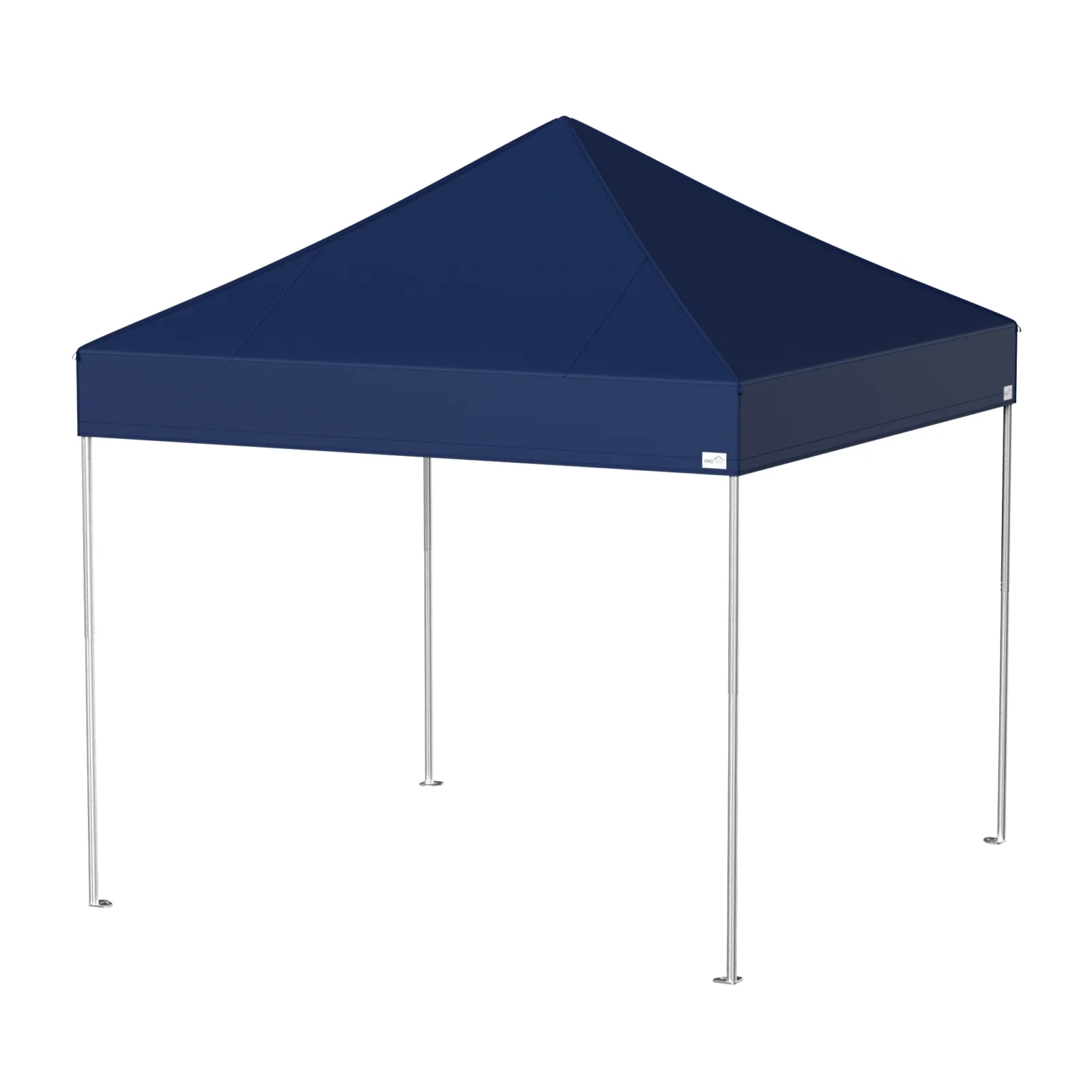
When the wind picks up, it’s essential to make sure your folding tent is properly tensioned. The best way to do this is to use a suitable professional tensioning kit, which you can purchase as an optional accessory from Pro-Tent. This kit consists of 50 cm long, T-shaped stakes, a hammer, and tensioning straps with a quick-release mechanism.
Important Rules for Proper Tensioning
- The correct angle: For the best possible results, make sure to stake out your folding tent in a physically sound manner. To do this, the guy lines should extend away from all four corners of the folding tent at an angle of approximately 45 degrees.
- Ground check: First, it’s important to check the ground conditions and ensure that the tent stakes have a secure hold. If stakes cannot be driven into the ground (unsuitable surface), our water weights—which can be filled with 50 liters (foldable PVC water container) or 75 liters (wheeled water cart)—provide an alternative solution. Of course, other types of ballast or anchoring options available in the immediate vicinity can also be used to securely anchor the tent.
- Proper Tension: CAUTION: Do not tighten the guy lines too much. Apply only moderate tension to prevent them from sagging. In windy conditions, you must check from time to time whether the guy lines are still holding securely—and, if necessary, readjust them or reposition the tent stakes.
- Adjusting to Wind Strength: In light winds, it is sufficient to secure your folding tent using the loops at the corners of the canopy. However, as the wind picks up, we strongly recommend securing the tent via the folding tent frame:
- Route the guy line around the connector on the support legs, secure it with the carabiner, and tension it outward as usual.
- When used with side walls, the guy lines are routed outward between the valance and the side wall.
- Safety takedown: In the event of a storm or very severe thunderstorms, it is generally safer to take down folding tents for safety reasons.
Note: Tensioning is particularly effective and efficient, as it not only keeps your folding tent in place in windy conditions but also prevents excessive movement of your folding pavilion, which could, in the worst case, damage the structure.
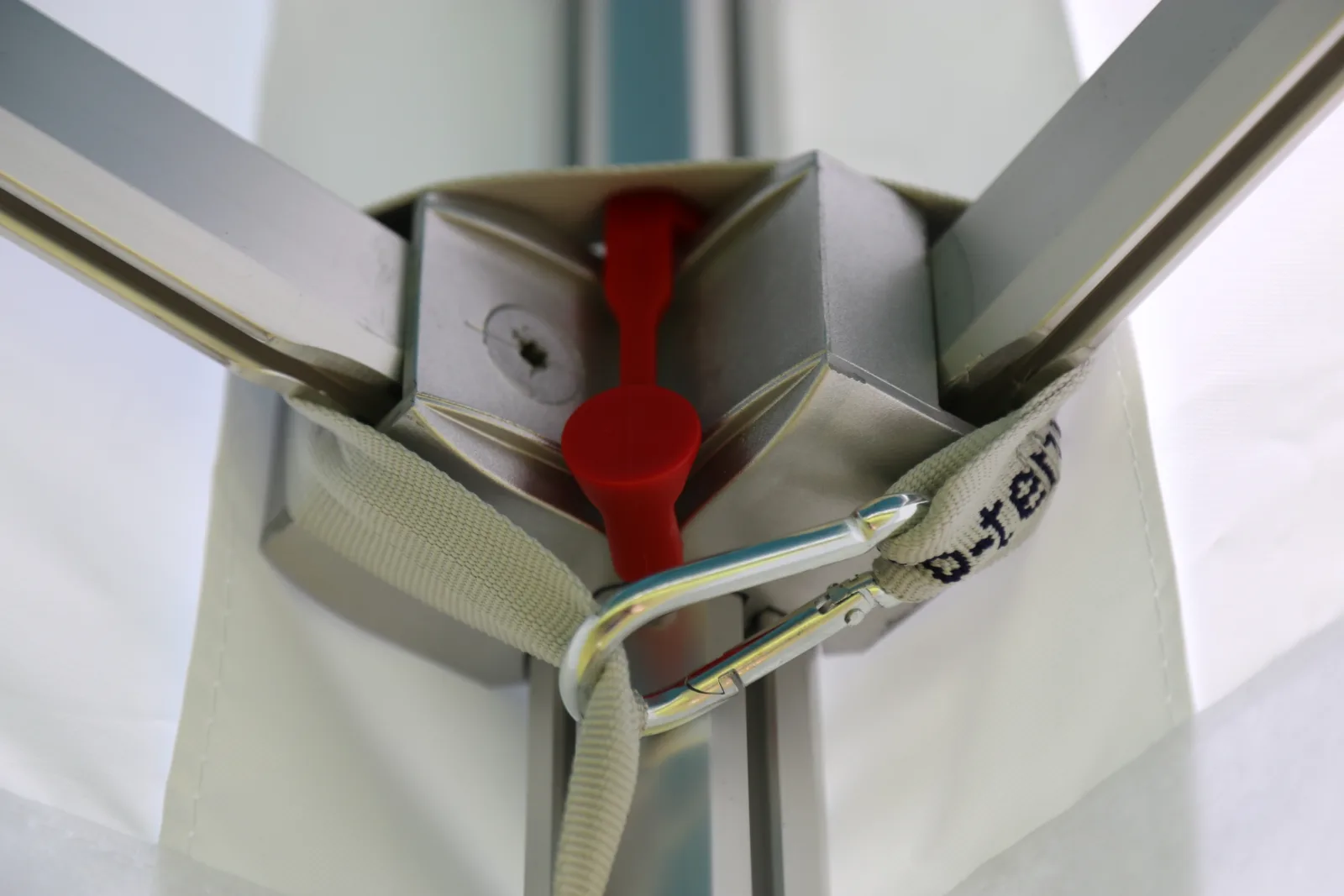
Carefully tension the tent roof to secure your folding tent
The roof of your folding tent must also always be properly tensioned. If it lacks tension, water pockets may form when it rains.
With Pro-Tent folding tents, you don’t have to worry about the tension of your fabric roof. That’s because these folding pavilions feature a gable tension spring in the gable. This ensures the fabric roof is always perfectly tensioned. Additionally, the gable tension spring absorbs the force of gusts, thereby reducing the strain on the structure.
Side panel tensioners provide additional tension for the canopy
The fabric roof of Pro-Tent folding tents also features side panel tensioners in the form of Velcro straps. These help prevent water pockets from forming during heavy rain and can be easily tightened in just a few simple steps.
CAUTION: Always loosen the side tensioners first when taking down the tent!
Pro-Tent accessories for securing your folding pavilion
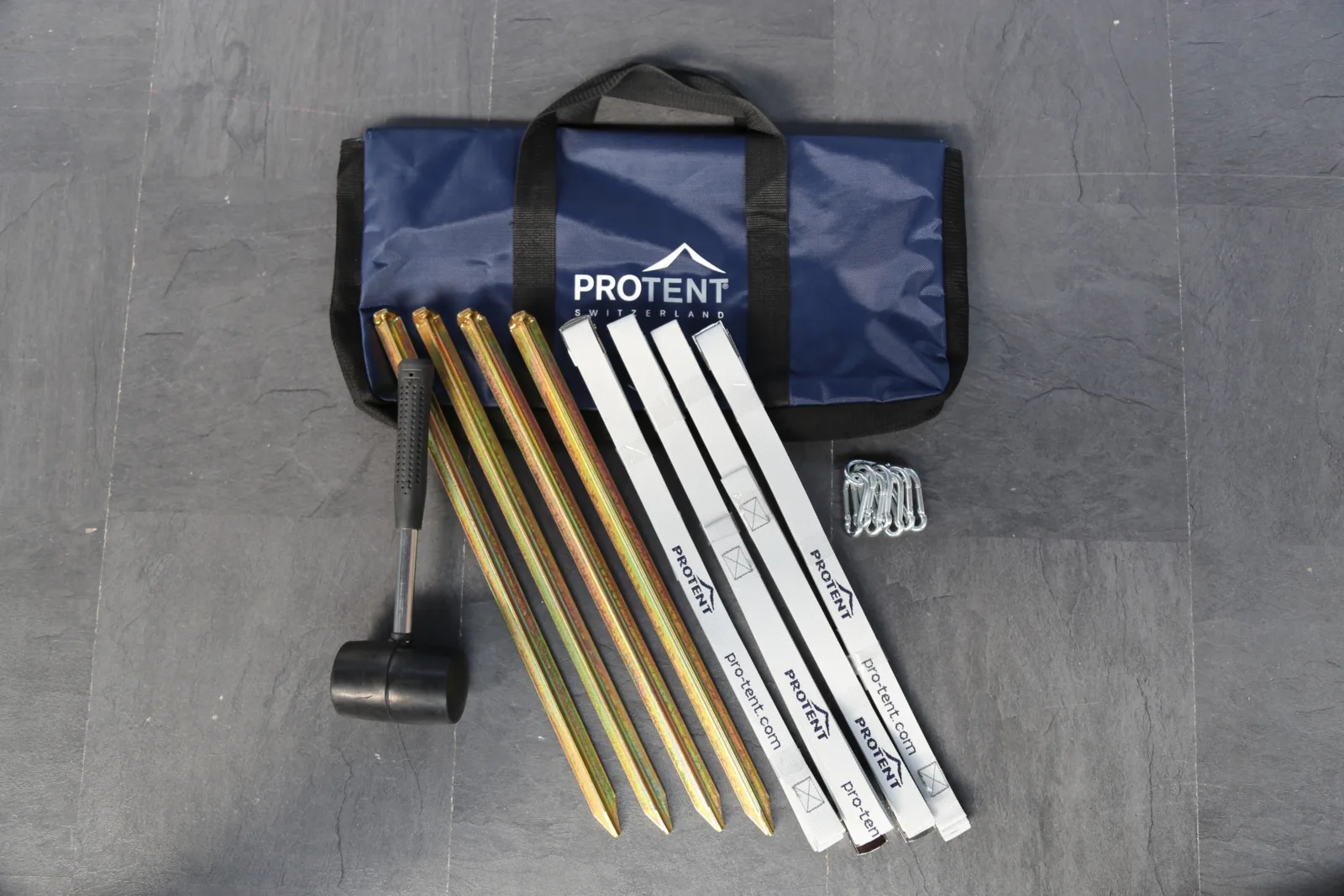
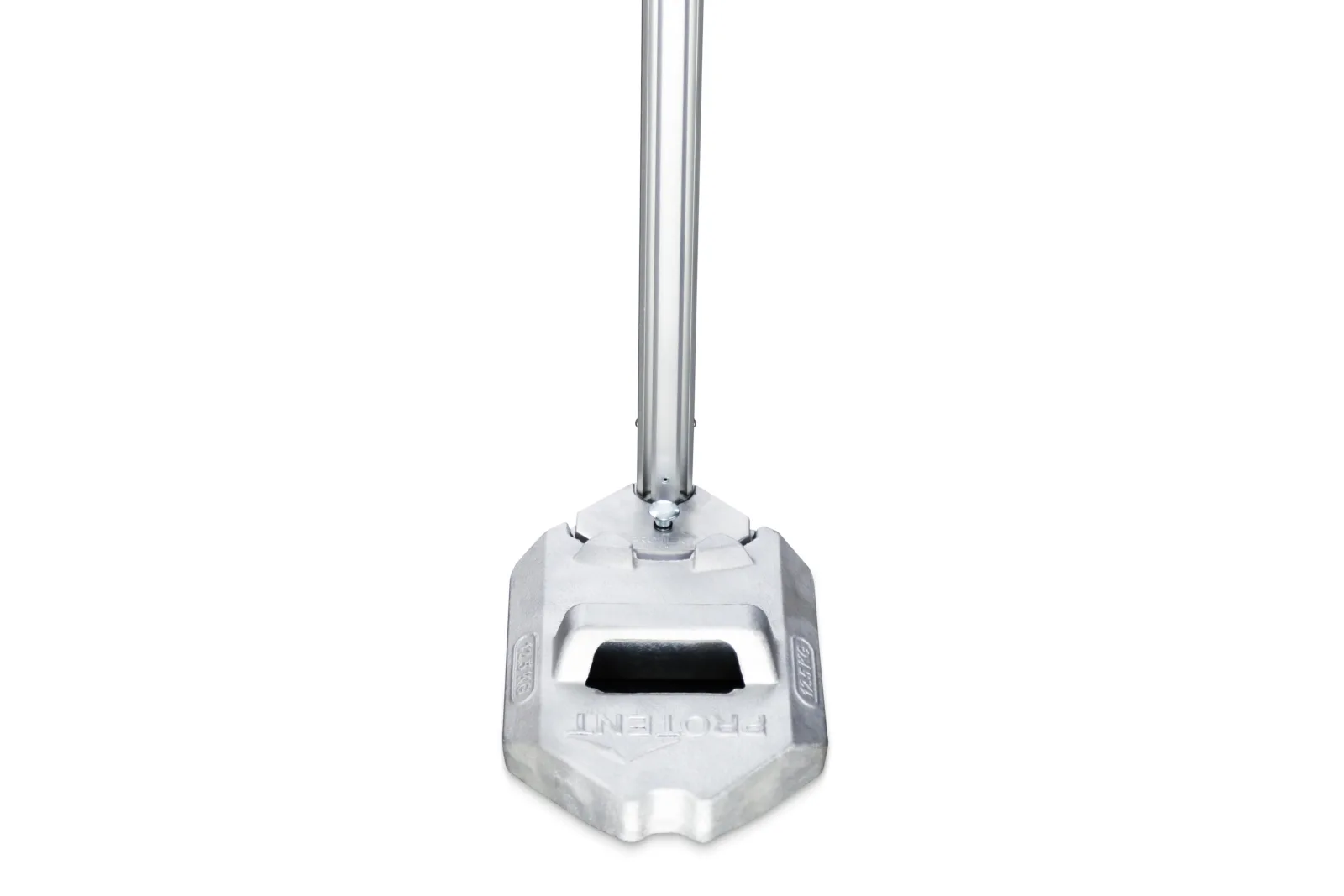
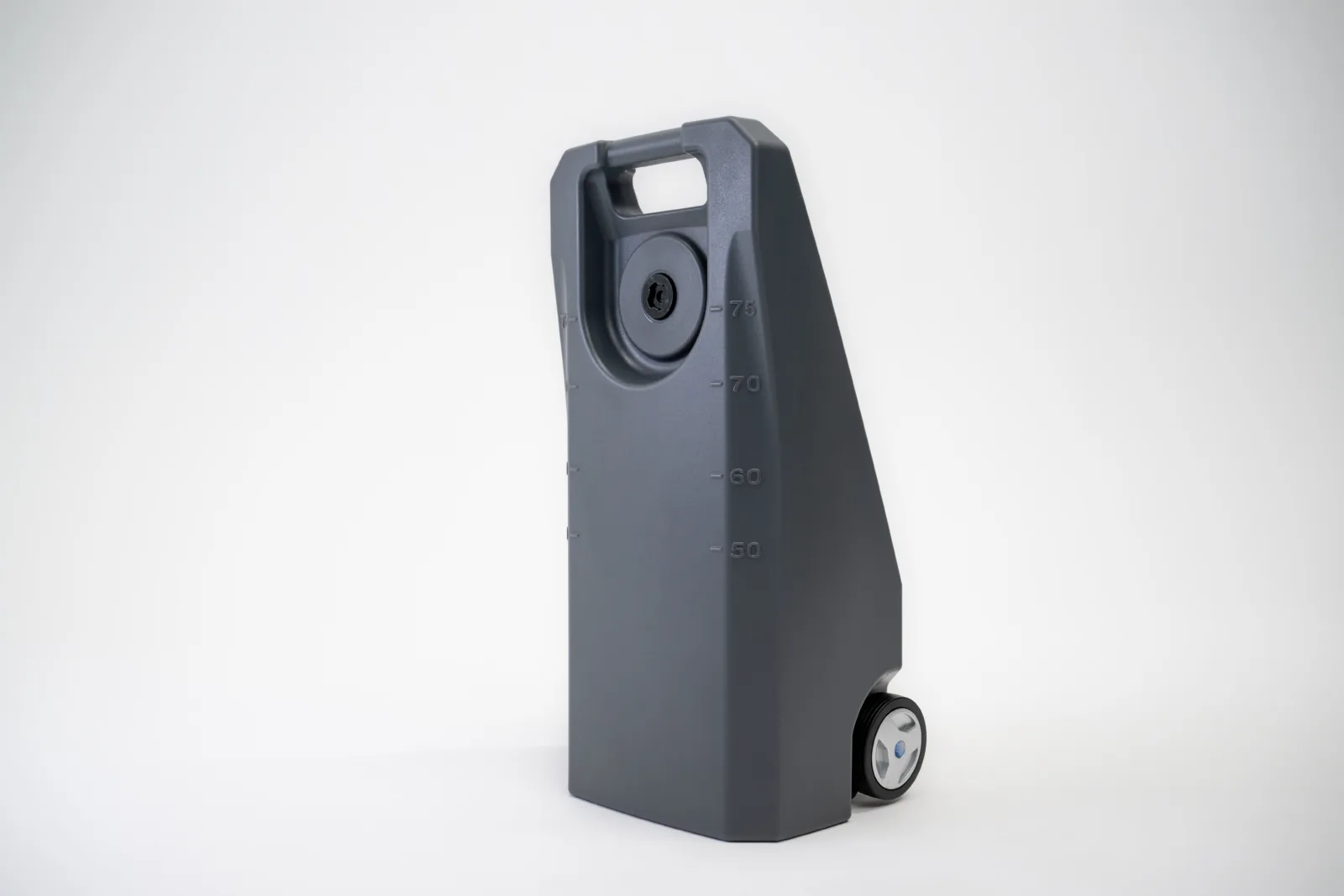
The Pro-Tent accessory lineup offers a variety of options for securely anchoring your folding tent:
| Anchoring Accessories | Features & Use |
| Professional Tensioning Kit | 50 cm T-pegs, hammer, and tension straps with quick-release mechanism (additional units can be ordered at any time). |
| Weight Plates | Available in 10 kg, 12.5 kg, and 15 kg. Some are stackable (up to six 12.5 kg plates per leg) or can be connected (two 15 kg plates combined). |
| Water Weights | Capacity of 50 liters or 75 liters; the ideal alternative if the ground isn’t suitable for stakes. |
| Sand weights | 10 kg capacity; they are attached to the support leg and can therefore be mounted over a weight plate. |
How much wind can a well-secured folding canopy withstand?
| Level | km/h | Knots | Wind designation |
| 0 | 0 – 1 | 0 | Calm |
| 1 | 1 – 3 | 1 – 3 | Light wind |
| 2 | 6–11 | 4–6 | Light wind |
| 3 | 12–19 | 7–10 | Light wind |
| 4 | 20–28 | 11–16 | Moderate wind |
| 5 | 29–38 | 17–21 | Brisk wind |
| 6 | 38–49 | 22–27 | Strong Wind |
| 7 | 50–61 | 28–33 | Strong wind |
| 8 | 62–74 | 34–40 | Storm |
| 9 | 75 – 88 | 41–47 | Forward |
| 10 | 89 – 102 | 48–55 | Severe storm |
| 11 | 103–117 | 56–63 | Hurricane-like storm |
| 12 | 118–133 | 64–71 | Hurricane |
| 13 | 134–149 | 72–80 | Hurricane |
| 14 | 150–166 | 81–89 | Hurricane |
| 15 | 167–183 | 90–98 | Hurricane |
| 16 | 184–202 | 99–109 | Hurricane |
| 17 | > 202 | > 109 | Hurricane |
In low to moderate winds, you don’t need to worry about your folding tent as long as it’s properly staked and secured. Even stronger winds aren’t a problem for a sturdy folding tent—at least not initially—as long as it’s been secured properly.
Things become critical at wind force 8 and above. This is considered a full-blown storm, with wind speeds already in the range of 62–74 km/h. During such a storm, people should generally avoid being outdoors, as these winds are potentially life-threatening due to flying debris.
Consequently, even a properly secured folding tent reaches its limits in such conditions. Since you yourself are no longer safe outdoors and should seek shelter in a secure building, it’s of no use if a folding tent manufacturer guarantees higher wind resistance. After all, even your folding tent cannot protect you from potentially life-threatening situations.
So, when using your folding pavilion outdoors, keep an eye on the weather forecast. This way, you can react early and take down your folding tent if strong winds pick up. If you are caught off guard by a storm, a folding tent can usually be folded up quickly.
If there isn’t enough time to take it down, you can at least remove the side walls to reduce the surface area exposed to the wind before seeking a safe place. If your folding tent sustains damage during the storm, you can simply contact the manufacturer—and, if necessary, have replacement parts sent to you for repairs.
FAQ: Frequently Asked Questions About Securing Folding Pavilions
When properly secured with stakes, tension straps, and appropriate ballast weights, Pro-Tent folding pavilions can withstand wind speeds up to Force 8 (storm).
As a general rule, people should not remain outdoors when wind speeds reach force 8 or higher, as flying objects can be potentially life-threatening. Accordingly, you should take down your folding tent well in advance—this is the only way to be 100% certain that no damage will occur. Furthermore, the user—and not the manufacturer—is always responsible and therefore liable.
Basically, you have three options for securing your folding tent: tensioning, and/or weighting, and anchoring.
Specifically, this means: You should always secure your folding tent with tension straps and tent stakes or water weights according to our instructions. In light winds, weight plates or sand weights are usually sufficient. However, if the wind picks up or weather conditions become unstable, you should definitely secure the tent with tension straps.
If you use a combination of proper tensioning with straps, a well-tensioned tent roof, and weight plates for anchoring, you’ll already be getting the maximum wind resistance out of your folding tent.
Another tip for extra wind resistance is to remove the side walls. These provide additional surface area for gusts to catch on, thereby putting extra strain on the folding tent frame.
With these methods, when implemented correctly and under the right conditions, you can use your folding tent in winds up to force 8. Please keep in mind that greater wind resistance is of no practical use, since at such high wind speeds you should seek shelter in a secure building anyway to avoid putting yourself in danger from flying debris. When in doubt, it’s better to take it down too early than too late.