Folding Tent vs. Folding Pavilion
What’s the difference, anyway?
If you’ve ever looked for a folding tent, you’ve probably noticed one thing: different manufacturers use different terms for the same product. Sometimes they call it a folding tent, other times a folding pavilion. This can quickly become confusing for buyers without the relevant background knowledge. Ultimately, the question arises: Is there a difference?
In our guide, we’ll explain which term is correct and whether there’s actually a distinction to be made. You’ll also learn what sets a folding pavilion apart, where it comes from, and who invented it.
What Is a Folding Pavilion?
Linguistic distinction from a folding tent
The Semager tool, which establishes relationships between words based on a mathematical method, identifies a 90% similarity between “folding tent” and “folding pavilion.” It also shows a 94% outbound word relationship.
From a purely linguistic perspective, the two terms are thus closely linked. This connection can also be substantiated historically: As far back as the 18th century, the root word “pavilion” meant nothing other than “tent.” The terms are therefore synonyms.
This is also evident in search engine results, as search engines make no distinction and display pages describing “folding pavilions” when a search is conducted for “folding tent,” and vice versa.
Even when searching for definitions, the same explanation appears for both “folding tent” and “folding pavilion.” In common usage, the terms therefore refer to exactly the same thing. Overall, a folding pavilion is the same as a folding tent.
The History of the Folding Pavilion—A Brief Overview
Pavilions have existed since ancient times. Back then, they consisted of simple wooden poles covered with appropriate fabrics. Today, they are often metal frames designed to be staked into the ground or permanent structures for use in private gardens.
A special type is the folding pavilion, which features a practical folding mechanism. This ensures quick setup and takedown, which is particularly convenient for frequent use in different locations, but also offers advantages for daily use when the pavilion needs to be taken down each evening.
Heinz Stöckler isthe inventor and first manufacturer of aluminum folding tents. In the 1990s, he founded the Pro-Tent division for this purpose; in 2000, this division evolved into what is now Pro-Tent AG.
How quickly can a folding pavilion be set up or taken down?
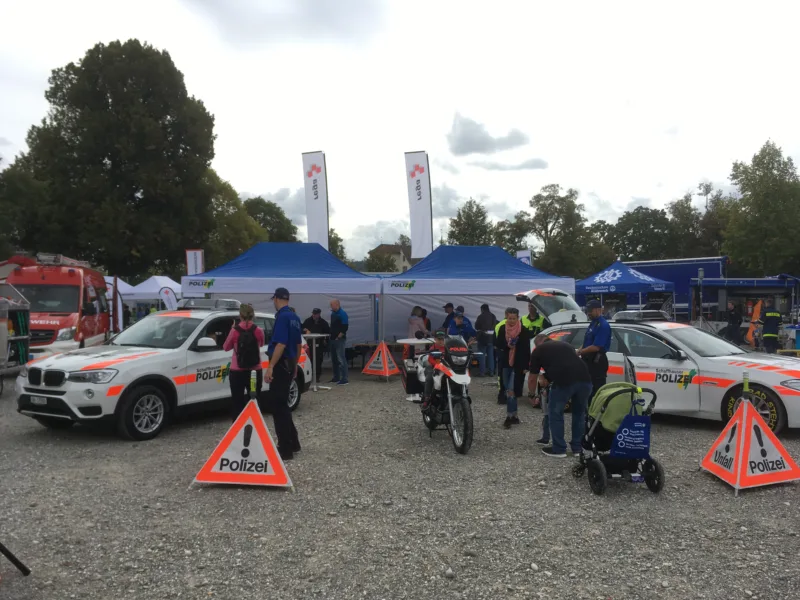
The unique feature of the folding pavilion is its quick setup and takedown. This is a significant advantage over plug-in pavilions or permanently attached pavilions. Thanks to the folding mechanism, the tents can often be safely set up and secured within just a few minutes. Folding pavilions are therefore portable and can be set up quickly anywhere.
How can a folding pavilion be customized?
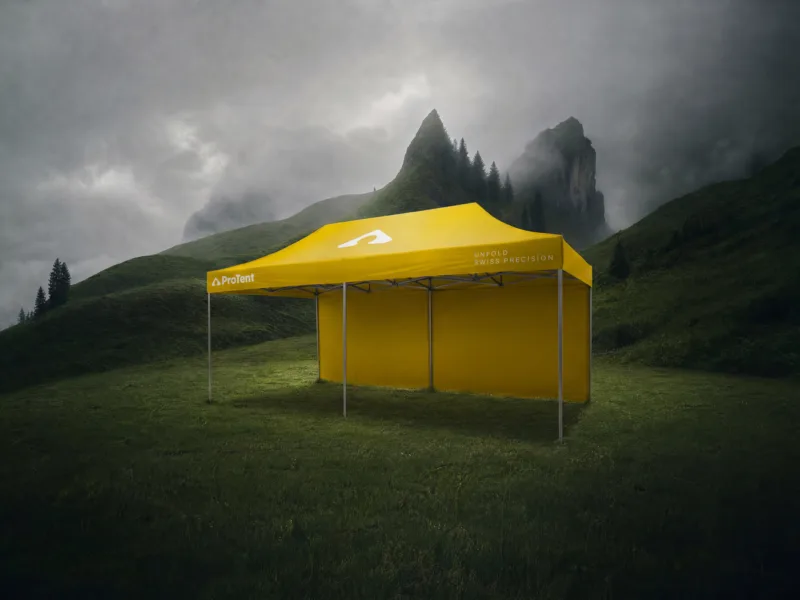
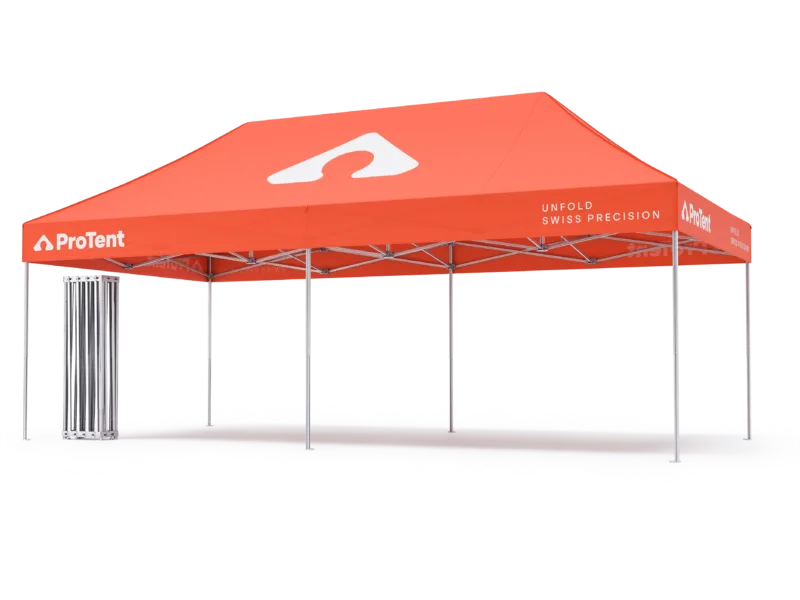
Of course, as with other systems, there are ready-made configurations available for quick purchase. But you can also customize your own design with a wide variety of colors and different printing methods. The possibilities for customization are just as diverse, so you’ll end up with a folding pavilion that perfectly matches your taste.
How large can and should a folding pavilion be?
Typically, the maximum size of a folding pavilion is approximately 8 x 4 m, for a total area of 32 m². The exact maximum size varies from manufacturer to manufacturer and may differ by a few square meters.
However, larger versions aren’t practical with a single folding pavilion, as the stability of the structure would suffer. Depending on the system, though, multiple folding pavilions can be connected to form a larger pavilion area, enabling use in large-scale applications.
The ideal size depends on the specific intended use. Generally speaking, anything is possible, from a small model to a large pavilion. There’s no one-size-fits-all answer as to which size is right for you; this can only be determined through a personal consultation.
Discount Store Folding Pavilion vs. High-Quality Professional Folding Pavilion
What should I buy?
Many home improvement stores and discount retailers now offer snap-together or folding pavilions—at very low prices. This raises the question of whether such a pavilion might be sufficient. Unfortunately, the decision between a cheap folding pavilion and a professional folding pavilion is often based solely on cost rather than the intended use.
Ultimately, only your specific intended use should determine which model you choose. Professional folding pavilions generally offer a number of advantages:
- More stable & durable
- More reliable in challenging weather
- Customizable
- Overall, the higher-quality product
So if you use your folding pavilion frequently—perhaps even for commercial purposes—set it up and take it down regularly, and use it outdoors, then there’s really no getting around the professional version. Discount store folding pavilions simply aren’t up to the task. So carefully consider which folding pavilion is the right choice for your application area.
How Sturdy Are Folding Gazebos?
The stability of a folding pavilion depends heavily on the quality of its design and construction. For example, aluminum is a better choice than steel because it doesn’t rust and is much lighter than steel while offering comparable stability and strength.
High-quality folding pavilions should be able to withstand even strong gusts of wind when properly secured—ideally, they should be wind- and weather-resistant. Overall, with a folding pavilion, you’ll ideally get a high-quality product that can easily withstand heavy loads.
Are folding pavilions waterproof?
Whether a folding pavilion is waterproof depends on the material used for the tent roof and side walls, as well as how it is manufactured. Pro-Tent tent roofs and side walls, for example, are 100% waterproof with a water column of 10,000 mm, which is more than double the standard requirements.
Seams are often the weak points in the construction. In a waterproof folding tent, these should definitely be reinforced and thus sealed. Another factor is the tension in the roof, because water pockets can only be prevented during rain if the tent fabric is properly tensioned.
Features and Accessories for Folding Pavilions
There are many ways to customize a professional folding pavilion to your individual needs. High-quality models are also characterized by the fact that they can always be expanded with accessories. This gives you a versatile product that you can retrofit and expand according to your intended use.
Uses for Pro-Tent Folding Pavilions
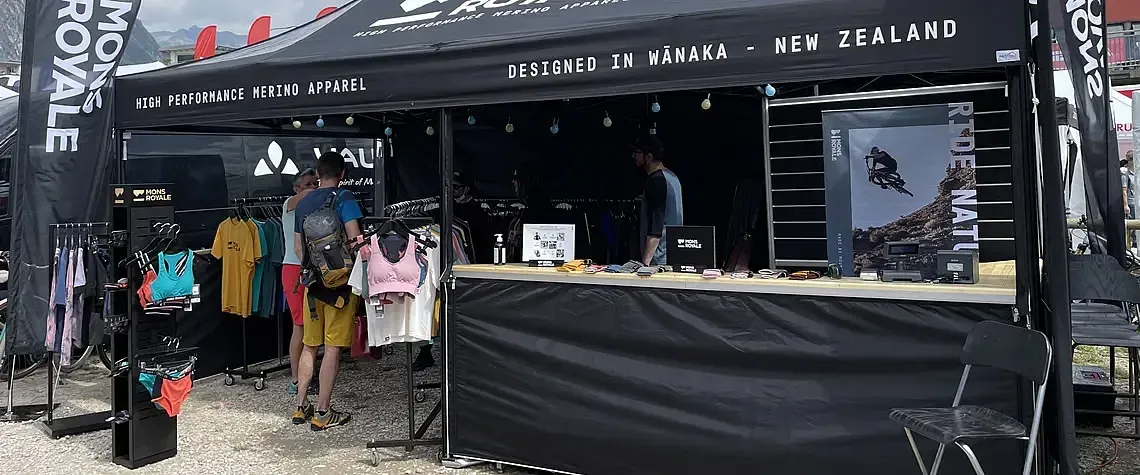
Essentially, the possible uses of Pro-Tent folding pavilions are virtually limitless. Thanks to the three series, the high-quality construction, and the wide range of accessories, these pavilions are suitable for many different application areas. Discover the perfect folding pavilion for your needs!